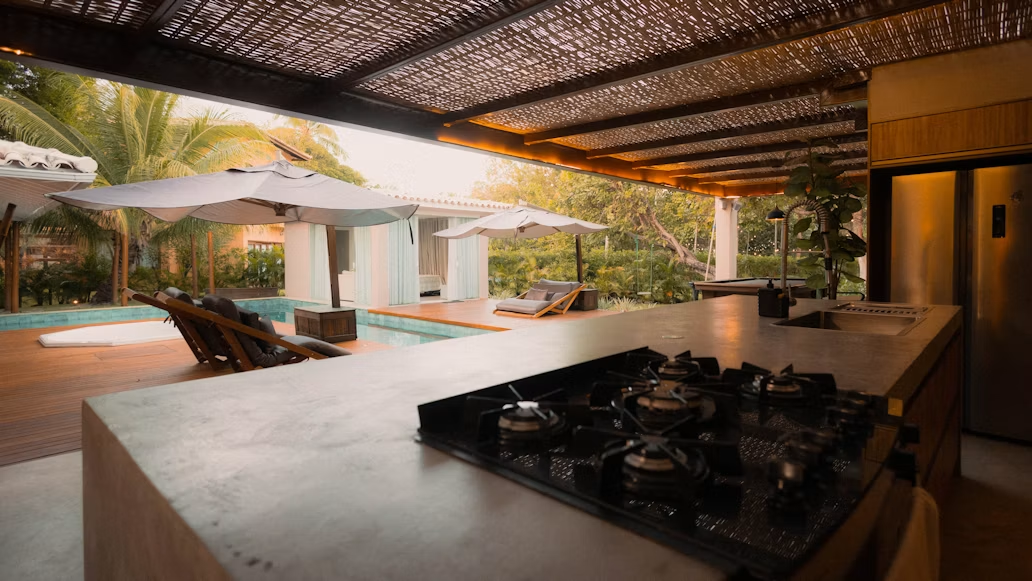
Creating a functional space for cooking and entertaining outside requires more thoughtful planning than simply placing a grill on the patio and calling it done. Well-designed outdoor kitchens combine durability, convenience, and style to create a space that genuinely gets used throughout the year rather than becoming an underutilized backyard feature collecting dust. Here are the essential elements worth prioritizing when planning your own outdoor cooking space from the ground up.
1. A High-Quality Built-In Grill
The centerpiece of any outdoor cooking space is naturally the grill itself, making it worth investing in a durable, weather-resistant model built specifically for permanent installation rather than a portable unit.
Many outdoor kitchens feature built-in gas or charcoal grills with reliable temperature control and ample cooking surface, ensuring the space can handle everything from quick weeknight dinners to larger weekend gatherings with extended family.
2. Ample Counter Space for Food Prep
Having enough workspace to prepare ingredients, plate dishes, and set out serving items significantly improves the overall cooking experience outdoors, especially when hosting multiple guests.
Durable countertop materials like granite, concrete, or stainless steel hold up well against weather exposure, making them popular choices for outdoor kitchens that need to withstand sun, rain, and temperature fluctuations throughout the changing seasons.
3. Adequate Storage Solutions
Weatherproof cabinets and drawers keep essential cooking tools, utensils, and supplies organized and protected from the elements between uses.
Thoughtfully designed outdoor kitchens incorporate enough storage to reduce the need for constantly transporting items back and forth from an indoor kitchen, making outdoor cooking sessions considerably more convenient and genuinely enjoyable for the host.
4. Refrigeration and Cold Storage
Having a dedicated outdoor refrigerator or cooler drawer eliminates constant trips inside for drinks, condiments, or perishable ingredients during meal preparation and entertaining.
This feature has become increasingly common in modern outdoor kitchens, allowing hosts to keep everything needed for entertaining within easy reach while guests remain outside enjoying the space and company.
5. Proper Ventilation and Safety Considerations
Since cooking equipment generates heat, smoke, and occasionally open flames, ensuring adequate ventilation and safe clearances around structures is essential for both comfort and fire safety.
Well-planned outdoor kitchens account for wind patterns, nearby structures, and appropriate distances from seating areas, keeping the space both functional and genuinely safe for regular, long-term use.
6. Comfortable Seating and Entertainment Areas
Beyond cooking functionality, incorporating comfortable seating nearby encourages guests to linger and socialize rather than treating the space purely as a functional cooking station.
Many outdoor kitchens are designed alongside dining areas, bar seating, or lounge spaces, creating a cohesive environment that supports both meal preparation and genuine entertainment throughout gatherings, big or small.
Final Thoughts
Designing a well-equipped outdoor cooking space requires balancing practical cooking functionality with comfortable, inviting design elements that encourage regular use throughout the year. By prioritizing quality grills, ample storage, proper refrigeration, and thoughtful seating arrangements, homeowners can create outdoor kitchens that become genuine extensions of their living space rather than rarely used backyard additions. Taking time to plan these features carefully from the start ultimately results in a space that enhances both everyday meals and larger celebrations for many years to come.